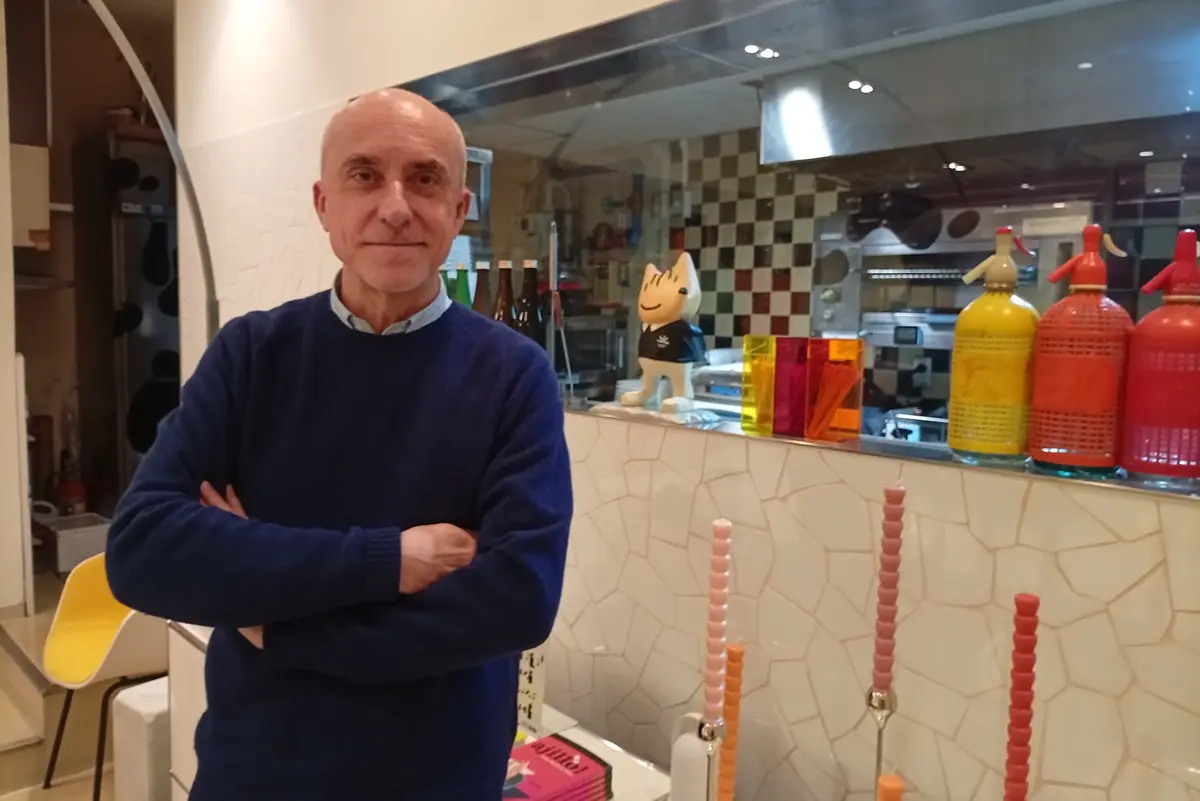
Thirty-five years after his arrival in Tokyo, the prestigious Catalan chef reflects on his career as an “informal ambassador” of Mediterranean gastronomy in Asia. From cooking for emperors and kings to the democratization of the high-end biquini (Catalan toasted sandwich), Barahona analyzes the demands of the Japanese market and the philosophy of a chef who refuses to leave the stove.
When Josep Barahona landed in Tokyo in 1991, the image of Spanish cuisine in Japan was limited to folkloric clichés. Today, Catalan gastronomy is synonymous with prestige. Barahona has been the invisible bridge between Japan’s excellent raw materials and Catalan culinary techniques. We meet him at L’Estudi, his intimate space in Shimbashi, to discuss gastro-diplomacy, market evolution, and why the best chefs in Japan are the ones who still cook.
Thirty-five years in Tokyo. You arrived in 1991, in the middle of a paradigm shift. How has the “Catalonia brand” evolved through cuisine during these decades?
In ’91, we were practically unknown. The image of Spain was flamenco and oranges; being a chef was being an “outsider.” If you said you were Catalan, people didn’t place you unless you mentioned Gaudí. We have gone from being an exotic note to being a world quality benchmark. Today, Catalan cuisine is known and respected, but it has been a long road to move from exoticism to professional recognition.
In this context, how do you feel most comfortable defining your cuisine? Is it Catalan, Mediterranean, or an inevitable hybridization?
In Japan, you have to know where you are. Commercially, the entry door often has to be “Spanish cuisine” so the customer can locate it. I have done Mediterranean cuisine because it is a concept they understand and respect, but my essence, which comes out once the customer has crossed the door, is Catalan cuisine. It is the food I have eaten all my life at home. I don’t believe in purist obsessions; we live in a globalized world and you have to know how to adapt to be understood, but my base is the sofregits and the memory of the palate.
“The kitchen serves to create a climate of understanding; the after-dinner table is where many agreements are closed.”
It is said that Japan is the most demanding market in the world. How have you managed to make the Japanese client fall in love with concepts such as “picar” or tapas?
Japan has an impressive gastronomic culture; food is central to their daily life. Curiously, the concept of “picar” (sharing small plates) unites us. They have izakayas, yakitoris, or sushi, which are formats where many things are tasted. The hardest part was breaking the stereotype of “European cuisine” as a rigid structure of first and second courses. When I explained that at home we like to share and try various flavors, they connected immediately because it is part of their DNA.
Large decisions are often made around a table. What is the importance of gastronomy in international relations in Tokyo?
It is of paramount importance. I have been lucky enough to cook for presidents of the Generalitat, the Spanish Government, elite athletes, and even the Imperial Family. One of the most special moments was the official farewell dinner for King Juan Carlos; it was one of the few times the entire Japanese Imperial Family gathered in one space. Cuisine serves to create a climate of understanding. Although I like people to come to eat and not just to do business, it is undeniable that the sobretaula (after-dinner talk) is where many agreements are closed.
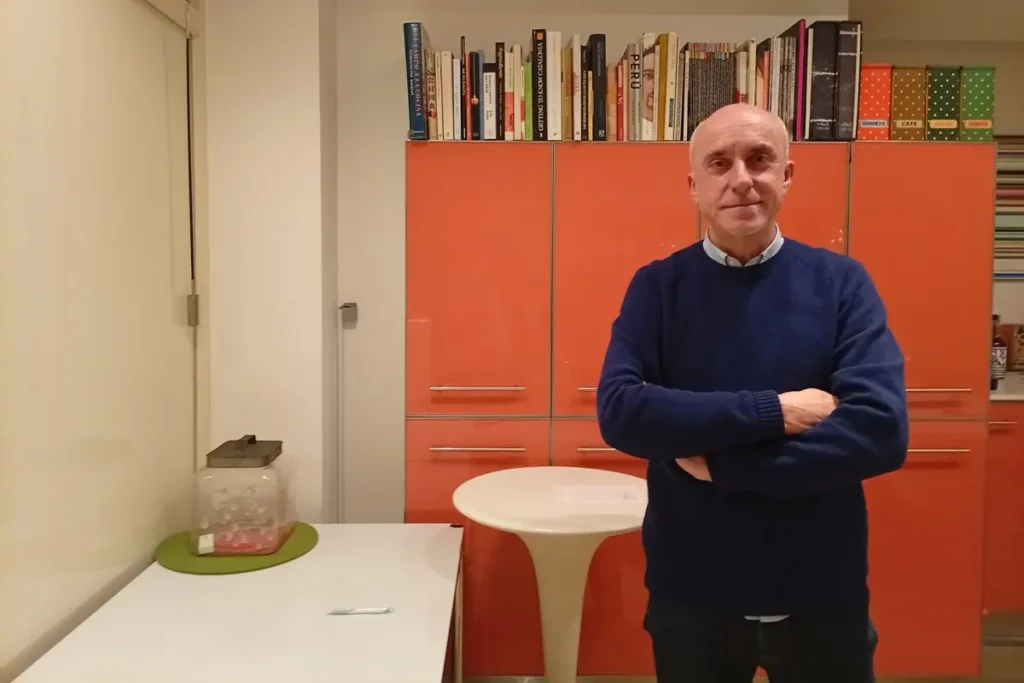
You have cooked for kings, emperors, and major sports stars… But rumor has it there was an exception for “sentimental” reasons?
(Laughs) Yes, it’s true. I’ve done catering for almost everyone, including Barça players, but once I was asked to do a reception for Real Madrid at the Embassy and I had to say no. I told them: “Look, I’m a huge Barça fan, I really can’t!” We said it half-joking and they understood perfectly, but some things are part of who you are. In the end, one has to be authentic with their feelings, and my passion for Barça is one of them, even on the other side of the world.
With projects like BIKINI, you managed to democratize quality cuisine. How do you scale a business in Japan without losing the “premium” essence?
I reached a point where I no longer believed in the classic concept of a restaurant as a heavy, rigid structure. With BIKINI, we wanted a casual but impeccable place. The key is to take care of the detail: you can serve more affordable products, but the glass of wine must be good, the atmosphere must be beautiful, and the technique must be at the level of the best French or Italian school.
When it comes to the supply chain, how do you manage the balance between imports and local Japanese products?
The evolution has been total. Thirty years ago, I imported oil and wine almost in suitcases; now we find everything. But I am clear: I will not make a dish if I don’t have the right raw material. That said, it would be absurd to bring fish or vegetables from Europe when we have exceptional products here. The secret is to use Catalan techniques with the best Japanese products.
If you had to choose a “diplomatic pairing” to seal an agreement between Catalonia and Japan, what would it be?
Undoubtedly, a fricandó (traditional Catalan beef stew). It is a dish that totally identifies me, unpretentious but of incredible depth. I make it following my mother’s recipe, with its onion, tomato, rancid wine, and its untouchable picada. The only variation? I use Japanese beef (wagyu), specifically the misugi part. It has a texture and elegance that elevates the dish to another dimension.
What has been the most difficult lesson in managing teams in Japan?
Japanese discipline is a huge advantage, but the lack of improvisation is the challenge. They are trained to work in a team and follow the manual perfectly. If you make a mistake in the explanation, they will replicate the error with the same precision. Once you understand their mentality, they are the best professionals in the world.
“In Japan, the best chefs are the ones who actually cook every day; I don’t understand a cook who doesn’t want to cook.”
Tokyo is a city that fascinates and devours. What has Japan given you that you wouldn’t have found at home?
Professionally, it has given me a lesson in humility and constancy. In Japan, the best chefs are the ones who actually cook. In Europe, when a chef reaches a certain level of fame, they often move away from the stoves to dedicate themselves to management or image. Here you see chefs in their 80s or 90s who are still in the kitchen every day. I have been at L’Estudi for 21 years and if someone makes a reservation, they know they will find me cooking.
How do you see the new batch of international chefs arriving in Tokyo? Does Catalan cuisine still have room to grow?
Obtaining a work visa is becoming increasingly complicated, although demand for personnel is rising. Regarding Catalan cuisine, it has an enormous space to grow. Japan is a place where, if you come with a desire to work and study our roots (the sofregits, the picades, the slow cooking), you will be amazed. The field for Catalan gastronomy here is still virgin in many aspects.
Will Barcelona win the Champions League this year?
The Spanish League, yes; the Champions, no.