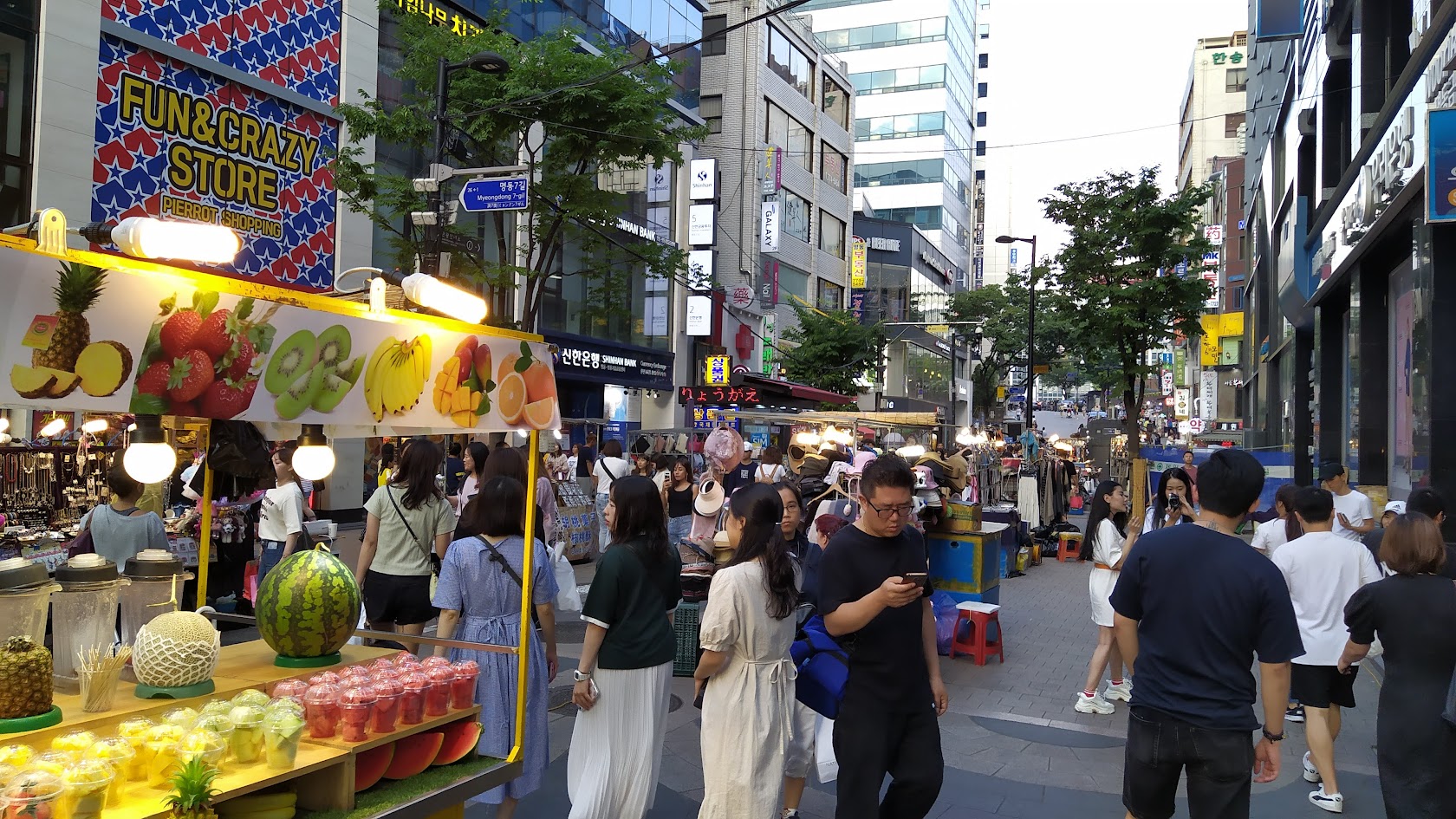
As East Asia grapples with an unprecedented demographic crisis, a sharp policy divide is emerging between its two largest economies. While South Korea has launched an ambitious “2030 Immigration Policy Future Strategy” to integrate international talent, Japan appears to be moving in the opposite direction, tightening residency controls and increasing linguistic barriers. This divergence is no longer just a social issue; it has become a central factor in the regional race for economic sustainability and technological leadership.
The South Korean plan represents a fundamental shift toward converting immigration into a strategic advantage. The government in Seoul has introduced a suite of new pathways, including the Top-Tier Visa for specialists in AI and robotics, and the K-Core Visa (E-7-M), specifically designed to retain international students graduating from local institutions. By streamlining digital applications and offering incentives for foreigners to settle in depopulated regions, South Korea is actively building a framework for long-term social and economic integration.
In stark contrast, the Japanese approach remains anchored in a philosophy of strict control and cultural homogeneity. Despite a desperate need for labor in healthcare, construction, and agriculture, the administration in Tokyo has recently moved to increase requirements for skilled worker visas. Fuminobu Okabe, a Professor of Labor Law at Soka University, notes that while Japan recognizes the necessity of foreign workers, there is a persistent institutional desire to avoid “cultural friction.”
“Japan acknowledges the need for international labor, but a deep-seated fear of social change continues to stall the implementation of clear, long-term immigration policies.” — Fuminobu Okabe
This lack of a clear path to permanent residency creates a “legal limbo” that affects the psychological well-being and professional commitment of current residents. For many, like Lina—a Filipino worker who has spent six years in Gunma—the shifting rules create a sense of permanent temporality. “I have built a life here, but the requirements are increasingly confusing,” she explains. “Sometimes I feel that no matter how hard I work, I will always just be viewed as ‘cheap labor’ rather than someone who contributes and belongs to this country.”
Beyond policy, the linguistic barrier remains a significant hurdle in the Japanese market. The recent proposal to enforce CEFR B2 (JLPT N2) proficiency levels for certain professional visas risks isolating foreign communities. Professor Okabe warns that without adequate support for those who do not master the language, Japan may see a proliferation of isolated enclaves, leading to the very social friction the government seeks to avoid.
Ultimately, Japan faces a structural dilemma that cannot be solved through automation or elderly employment alone. As South Korea moves to formalize its status as a multicultural hub for global talent, Japan’s restrictive shift may inadvertently discourage the specialists it claims to seek. For the business community, the message is clear: the ability to integrate and value foreign workers is no longer a matter of social altruism, but a prerequisite for national survival in the late 2020s.