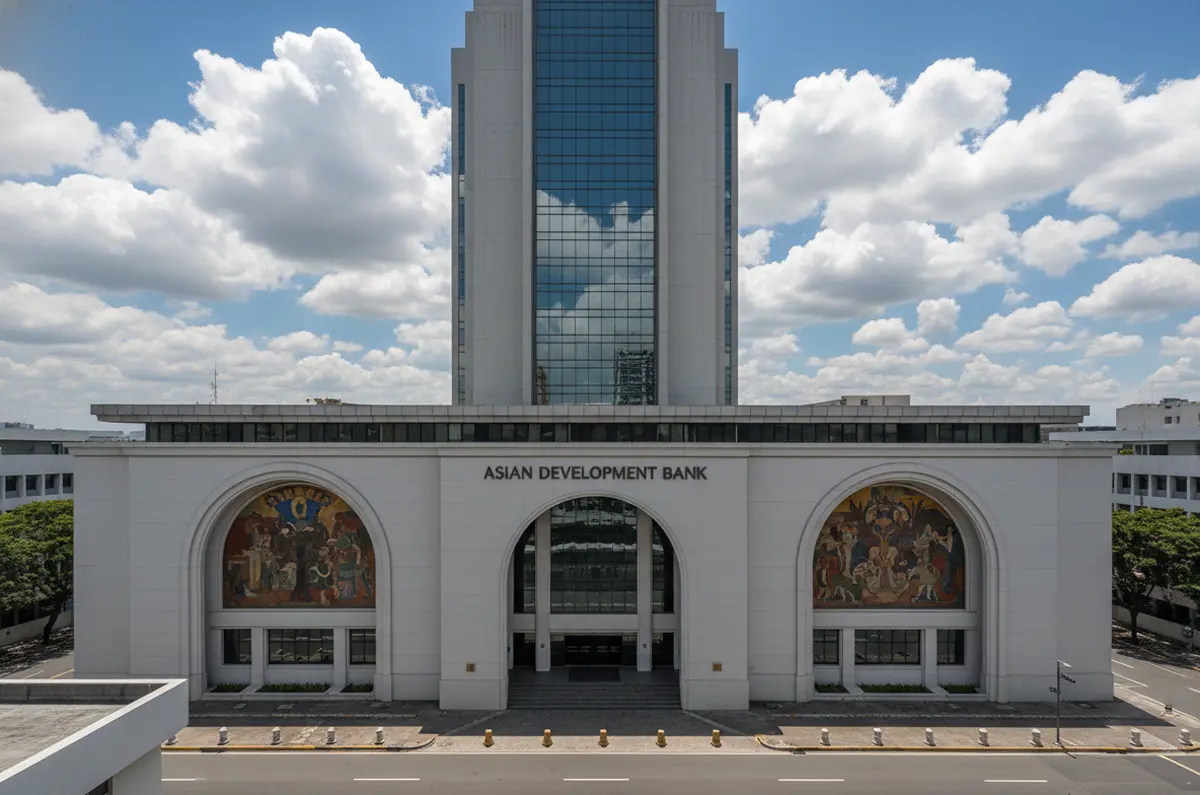
Asian Development Bank (ADB) President Masato Kanda has announced his intention to stand for reelection at the end of his current term in November 2026, positioning continuity as a key priority at a time of heightened economic and geopolitical uncertainty across Asia and the Pacific.
Kanda framed his candidacy around the need for institutional stability in what he described as an era of “radical transformation” marked by overlapping global shocks. He stressed that the ADB remains an anchor for developing member countries, as volatility in trade, financing conditions and energy markets continues to reshape regional development needs.
Since taking office in February 2025, Kanda has overseen a significant expansion in the bank’s operational scale. In 2025, the ADB committed $29.3 billion from its own resources, a 20% increase year-on-year, while mobilising an additional $14.7 billion in co-financing, bringing total development finance to $44 billion. The institution has also advanced major regional programmes, including $10 billion for the ASEAN Power Grid and over $10 billion for the CAREC initiative.
At the same time, the bank has increased its role in crisis response, deploying emergency assistance across multiple countries including Afghanistan, Myanmar, Pakistan, the Philippines, Sri Lanka, Thailand and Viet Nam. It was also among the first multilateral development banks to respond to the Middle East conflict, reinforcing its positioning as a rapid-response financial institution alongside its traditional development mandate.
Kanda’s leadership has also been marked by structural reform, including updates to the ADB’s energy policy -now allowing support for nuclear power for the first time- alongside new environmental and procurement frameworks, and deeper operational coordination with the World Bank Group. Against this backdrop, his reelection bid signals a push to consolidate the ADB’s evolution from a traditional lender into a broader regional stability and infrastructure platform.