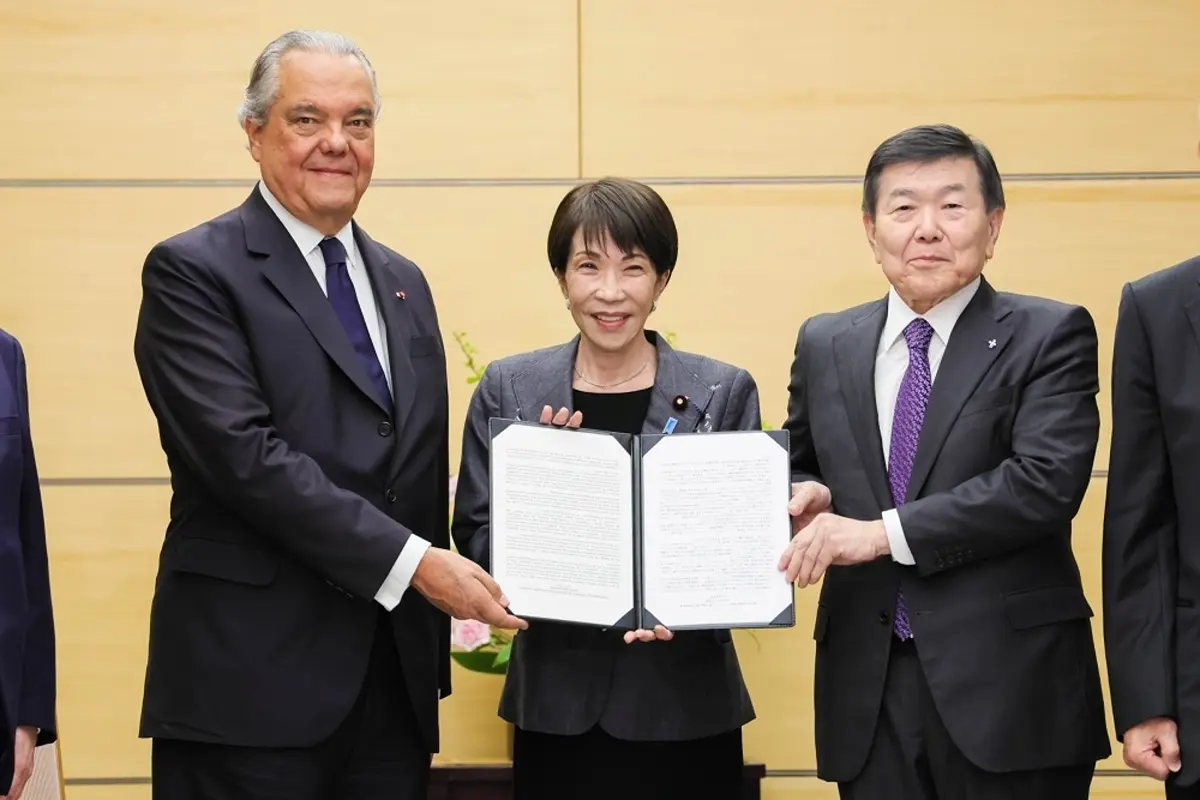
Prime Minister Sanae Takaichi signaled a new era of trans-continental cooperation after receiving a courtesy call from the Wise Group for Strategic Economic Partnership between Japan and Brazil in Tokyo this Wednesday. The high-level meeting centered on the submission of a final report designed to revitalize bilateral trade and investment. A key takeaway from the private sector participants was the urgent need to secure an early conclusion to the Japan-MERCOSUR Economic Partnership Agreement (EPA), which is viewed as a vital gateway to unlocking the full potential of the South American market.
The Takaichi administration has reaffirmed its full commitment to the report’s recommendations, placing a particular focus on 17 strategic sectors, including green energy, digital transformation, and advanced manufacturing. By leveraging the existing Strategic Partnership Framework, Tokyo aims to bridge longstanding regulatory and bureaucratic gaps that have historically hindered deeper integration with the MERCOSUR bloc. This technical and political alignment is expected to solidify Japan’s economic footprint in Brazil, creating a more predictable and streamlined environment for large-scale industrial investment and technological exchange.
For the diplomatic community, this move highlights a proactive shift in Japan’s foreign policy toward diversifying supply chains in an increasingly fragmented and volatile global market. Strengthening ties with the MERCOSUR trade bloc—comprising Brazil, Argentina, Paraguay, and Uruguay—provides Japan with strategic access to critical raw materials and renewable energy sources essential for its domestic green transition. As geopolitical tensions reshape traditional trade routes, this renewed Japan-Brazil alliance underscores the strategic necessity of building robust, values-based economic corridors across the Pacific.