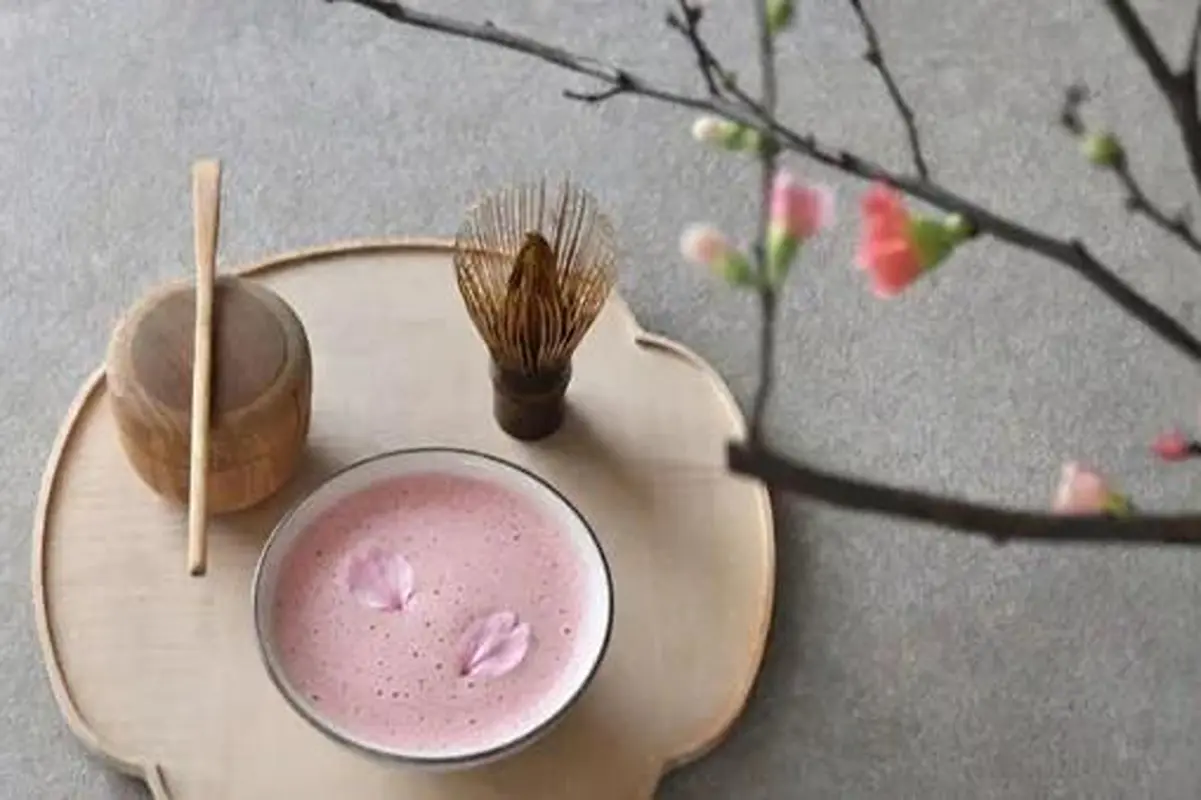
As cherry blossom season reaches its peak, a Tokyo-based brand is redefining how sakura is experienced—not as a fleeting moment, but as a curated sensory ritual. Wacha, a rising name in Japan’s botanical tea space, has introduced a limited-edition “Sakura Matcha” that reinterprets a centuries-old tradition through the lens of contemporary luxury and wellness.
Rather than focusing on consumption alone, the product positions itself as an experience. Inspired by the Edo-period custom of drinking sakura-infused tea, Wacha’s blend transforms preparation into a deliberate act: whisking reveals a soft pink hue, while edible blossoms float on the surface, evoking a miniature hanami within the bowl. The result is a fusion of aesthetic refinement and ritualized pause, increasingly sought after in global luxury markets.
The concept also aligns with a broader shift toward caffeine-free, mindfulness-driven consumption. Designed to be enjoyed throughout the day, the drink taps into growing demand for products that support digital disconnection, evening routines, and wellness-oriented lifestyles. In this context, Wacha’s positioning of “matcha as therapy” reflects a wider recalibration of how traditional products are adapted for modern rhythms.
Commercially, the response has been immediate. The initial release in March sold out within hours, with a restock in early April aimed at meeting rising international demand. Beyond the product itself, Wacha offers curated sets including tea bowls, bamboo whisks, and edible petals—framing the experience as a complete lifestyle offering rather than a standalone beverage.
In a market where luxury is increasingly defined by meaning, ritual, and emotional resonance, Wacha’s Sakura Matcha illustrates how Japanese cultural heritage continues to evolve into globally relevant formats. More than a seasonal novelty, it signals the emergence of a new category where tradition, design, and wellbeing converge into a refined, exportable experience.