Japan has voiced strong support for Pakistan’s role in facilitating recent U.S.-Iran talks, while stressing the urgent need to secure maritime stability in the Strait of Hormuz, a critical artery for global energy flows.
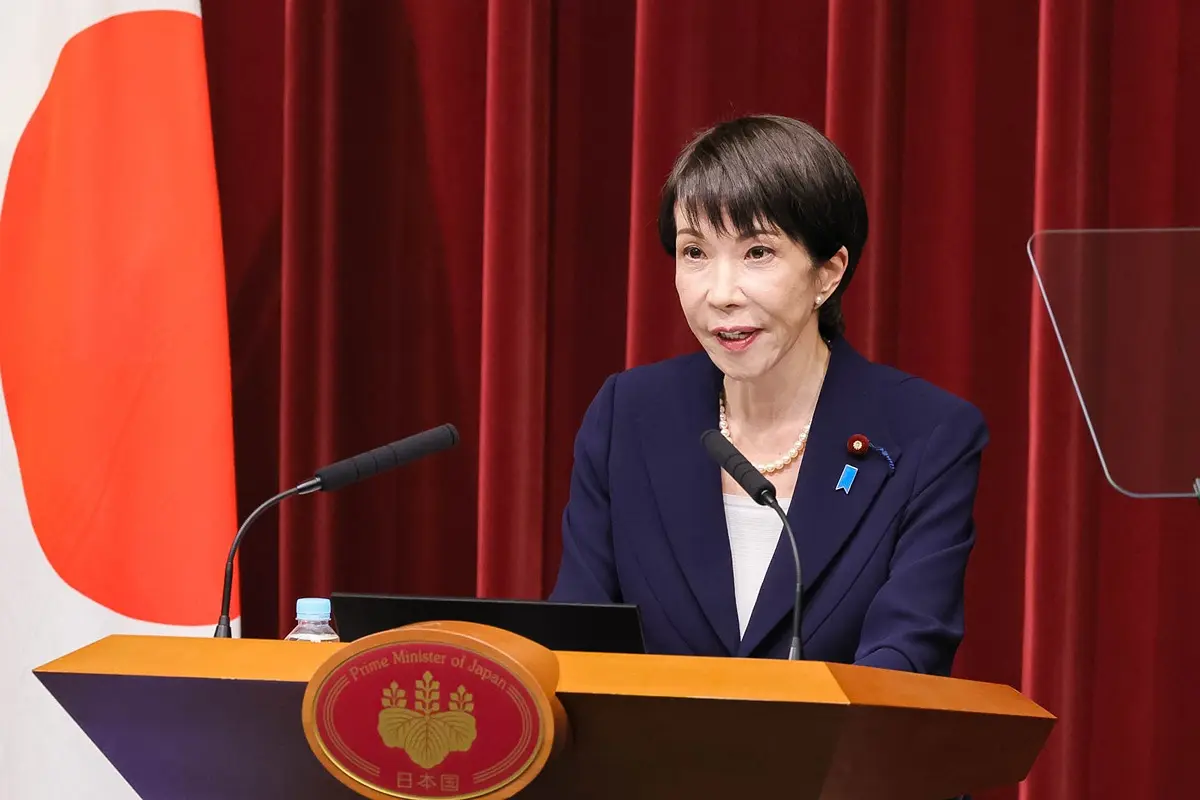
In a telephone conversation with Pakistani Prime Minister Shehbaz Sharif, Japanese Prime Minister Sanae Takaichi praised Islamabad’s mediation efforts and reaffirmed Tokyo’s backing for continued dialogue between Washington and Tehran.
Takaichi emphasized that the priority now is to achieve tangible de-escalation, warning that instability in the region could directly impact global logistics and energy security. She highlighted the strategic importance of the Strait of Hormuz, describing it as a “vital hub” whose safe navigation must be guaranteed for all nations.
Japan, heavily dependent on Middle Eastern energy imports, has maintained high-level diplomatic channels with both the United States and Iran, and is stepping up efforts to help reduce tensions. Takaichi underscored that restoring stability in Hormuz is not only a regional concern but a global public good.
Sharif, in turn, briefed the Japanese leader on the Islamabad talks and reaffirmed Pakistan’s commitment to sustaining the ceasefire framework and advancing diplomatic engagement. Both leaders agreed to strengthen bilateral cooperation and maintain close coordination in support of regional stability.
The exchange reflects Japan’s increasingly proactive diplomatic posture, positioning itself as a bridge between stakeholders at a time of heightened geopolitical risk.