Our website use cookies to improve and personalize your experience and to display advertisements (if any). Our website may also include cookies from third parties like Google Adsense, Google Analytics, Youtube. By using the website, you consent to the use of cookies. We have updated our Privacy Policy. Please click on the button to check our Privacy Policy.

Diplomacy and Business

The premium media partner for Japan’s diplomatic and corporate community.
120 Posts
Permanent residents without rights in Japan

Permanent residents without rights in Japan

Urmas Teder, journalist. Kimi Onoda’s recent remarks claiming that permanent residency in Japan grants “no rights” would already have been controversial on their own. But placed alongside the recent case of Manish Kumar -and even the ongoing controversy surrounding rugby international Lomano Lemeki- the comments become far more revealing. Together, these episodes expose a deeper anxiety inside contemporary Japan: the growing insistence that foreigners, no matter how integrated, should never be considered entirely part of the national community. Kumar, an Indian national and long-term resident of Japan, became the target of public and political scrutiny after a series of controversies…
Read More
Japan calibrates the new balance between Washington and Beijing

Japan calibrates the new balance between Washington and Beijing

The phone call between Sanae Takaichi and Donald Trump following the US president’s visit to China was officially presented as a conversation aimed at reaffirming the solidity of the alliance between Washington and Tokyo. Yet the political sequence of recent days points to a much deeper issue: Japan is trying to understand to what extent the nature of the relationship between the two great powers of the 21st century is changing. Trump’s visit to Beijing did not produce major historic agreements, nor did it lead to a strategic reconciliation between the United States and China. But it did reveal an…
Read More
The paradox of empty xenophobia

The paradox of empty xenophobia

Urmas Teder, journalist. Amidst swelling electoral rhetoric and a intensifying debate over the boundaries of Japan’s foreign population, Sohei Kamiya, leader of the ultra-conservative Sanseito party, has deployed one of those inflammatory questions designed to capture cheap headlines and win the applause of misinformed spectators: By what right do foreigners use Japan’s infrastructure? To suggest that international residents are mere "free riders" on a system built exclusively by and for the Japanese is not only technically false; it represents a display of supine stupidity and extreme malice. Foreigners in Japan do not live in a fiscal vacuum. They pay the…
Read More
The art of the reliable partner

The art of the reliable partner

The 2026 Golden Week has left a definitive image of Japan’s strategic trajectory. While much of the global conversation is dominated by the war, the management of systemic rivalries and the recalibration of supply chains, Tokyo has spent the holiday period executing a quiet but relentless diplomatic offensive. This was not a period of rest, but a masterclass in repositioning Japan as the indispensable node: the stable, predictable, and resilient partner in a complex Indo-Pacific. In a global landscape where supply chain security is the new sovereignty, Japan is playing a sophisticated game. While the major powers negotiate the fine…
Read More
The uncomfortable hierarchy of press freedom

The uncomfortable hierarchy of press freedom

Urmas Teder, journalist. The 2026 Reporters Without Borders index confirms a broader and increasingly uncomfortable trend: press freedom is no longer a dividing line between democracies and authoritarian regimes, but a gradient that cuts across both. In this shifting landscape, Japan and Estonia stand out not because they are comparable, but precisely because they are not. One is a mature, established democracy with deep institutional continuity; the other a relatively young state that has turned digital innovation into a structural democratic asset. Japan remains positioned in the middle tier of the global ranking. Formally, it guarantees press freedom and maintains…
Read More
Japan’s Golden Week diplomatic push

Japan’s Golden Week diplomatic push

Golden Week has traditionally been a period of domestic pause in Japan, but in 2026 it has taken on a different dimension: that of a carefully orchestrated diplomatic push. From Brussels to key capitals across the Global South, Tokyo has mobilised its political and economic leadership in a coordinated effort to strengthen partnerships and reposition itself within a rapidly shifting international order. At its core, this initiative reflects a calibrated blend of economic statecraft and strategic positioning. While the administration of Sanae Takaichi deepens cooperation with like-minded partners in areas such as technology and security, it is also engaging countries…
Read More
Transparency as strategy

Transparency as strategy

Urmas Teder, journalist. The 2026 World Press Freedom Index has once again drawn a quiet but consequential line between two of the world’s most advanced digital democracies: Estonia and Japan. For policymakers and investors alike, this is not merely a question of civil liberties. It is a measure of institutional credibility—and, increasingly, of economic competitiveness. Estonia’s performance is not accidental. In Tallinn, transparency is treated as infrastructure. The state’s digital architecture is built on the assumption that information must circulate, be audited and, when necessary, challenged. This approach has yielded what might be called a “transparency dividend”: a reputational premium…
Read More
Spain’s Embassy in Japan sparks backlash over warning tweet on theft

Spain’s Embassy in Japan sparks backlash over warning tweet on theft

Spain’s Embassy in Japan has stirred debate on social media after publishing a warning to Spanish travellers about theft laws in the country, with many users criticising the tone and implications of the message. The tweet, posted this week, cautioned that what may seem “unimportant” -such as taking items without paying- is considered a serious crime in Japan and can lead to significant legal consequences. The message urged visitors to “enjoy your trip with respect and responsibility,” but quickly triggered a wave of reactions online. A large number of replies questioned the framing of the warning, with some users sarcastically…
Read More
Japan tightens Mount Fuji climbing rules with mandatory gear checks

Japan tightens Mount Fuji climbing rules with mandatory gear checks

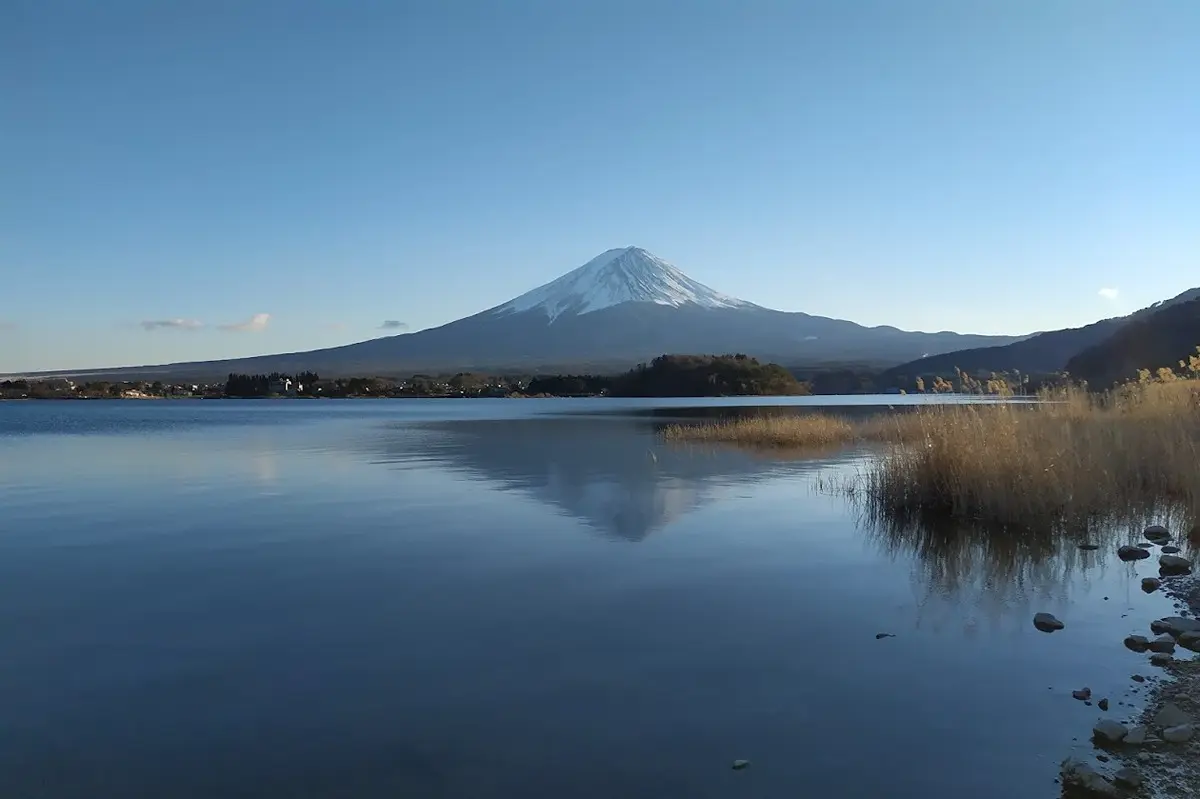
Japan will introduce stricter safety controls for the 2026 climbing season on Mount Fuji, as authorities in Yamanashi Prefecture move to enforce mandatory equipment checks on one of the mountain’s most popular routes. The new measures, focused on the Yoshida Trail, will require climbers to carry a minimum set of gear — including proper hiking boots, rainwear, and cold-weather clothing — in order to access the mountain. Officials say the rules respond to a growing number of accidents linked to poorly equipped visitors, particularly during peak summer months when conditions at the summit can still drop below freezing. Under the…
Read More
Japan’s quiet turn toward strategic assertiveness

Japan’s quiet turn toward strategic assertiveness

While much of the international spotlight remains fixed on great power rivalry between the United States and China, Japan is steadily shaping a more defined and self-conscious foreign policy posture of its own. What could be described as the “Motegi Doctrine” reflects a pragmatic shift: a foreign policy anchored in economic security, strategic partnerships, and a more proactive role in safeguarding national interests in an increasingly fragmented global order. At its core, this approach is less about confrontation and more about insulation. Under Foreign Minister Toshimitsu Motegi, Japan has moved to reinforce the resilience of its supply chains, protect critical…
Read More