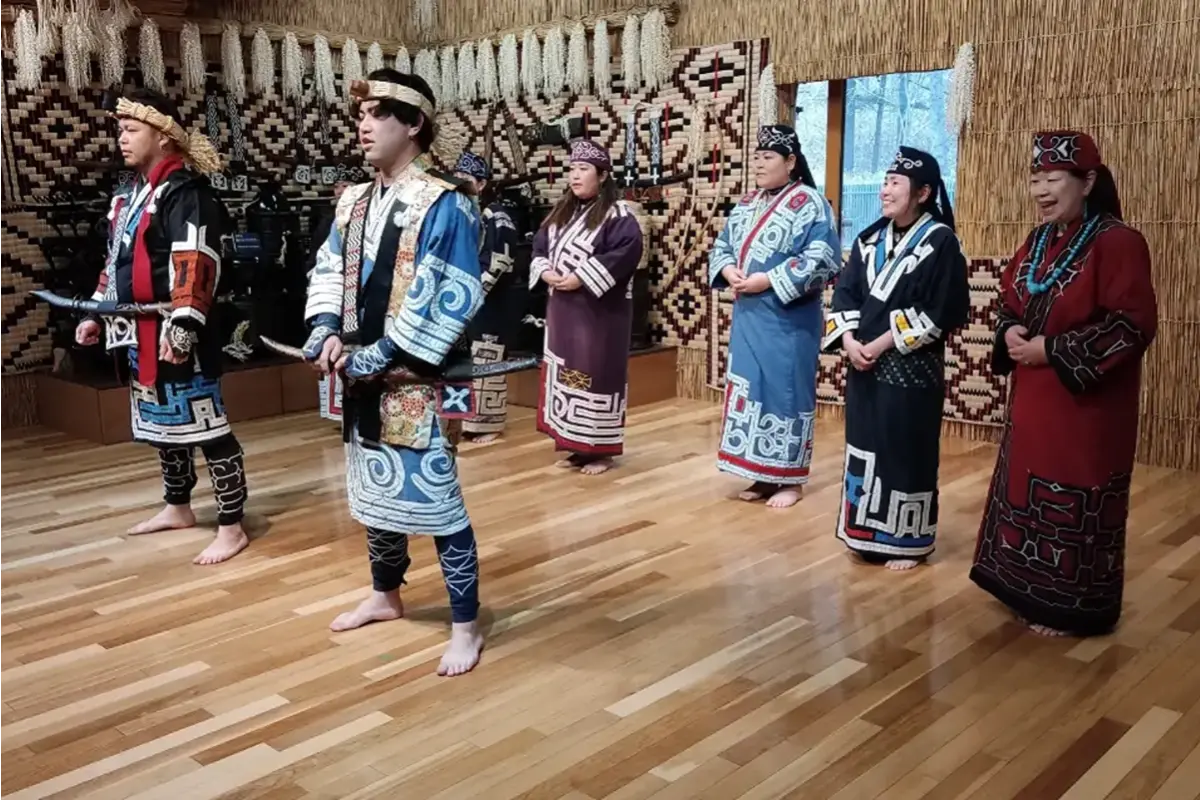
For centuries, the Ainu, the indigenous people of Japan’s northern regions, lived in symbolic harmony with the nature of Ezo, the island now known as Hokkaido. Their profound culture, distinct language, and unique religious beliefs—rooted in the idea that spirits, or kamuy, dwell in every living and inanimate object—flourished long before the formal annexation of their land by the expanding Japanese state.
However, modern history dealt a devastating blow to this ancient civilization. Starting in the 13th century, ethnic Japanese (Wajin) began arriving on the island, gradually encroaching on Ainu territory. Conflicts like Shakushain’s rebellion in 1669 and the Menashi-Kunashir uprising in 1789 marked the beginning of the end of Ainu autonomy and their deeply rooted lifestyle.
Following the Meiji Restoration in 1868, when Japan’s modernization process began in earnest, the Ainu faced aggressive assimilation policies. The Meiji government considered the traditional Ainu style of life to be that of “barbarians” or “savages”—an inferior people whose culture was destined for extinction. This perception was used to justify strict measures aimed at cultural erasure.
The central government seized Ainu land, banned traditional hunting and fishing practices that were essential to their economy, and, crucially, prohibited the use of the Ainu language. Children in schools were forced to learn and speak only Japanese, a policy that devastated a culture predominantly based on oral transmission, as the Ainu language had no written script of its own.
A significant turning point, and a vital step towards reconciliation, came in 2008 when the Japanese parliament unanimously passed a resolution recognizing the Ainu as an “indigenous people with their own language, religion, and culture.” This landmark decision provided the legal and financial framework for a renewed focus on cultural preservation and promotion.
“The unanimous 2008 parliamentary resolution marked a turning point, providing the legal and financial framework for cultural preservation and promotion.”
The most tangible symbol of this cultural revival is Upopoy, the National Ainu Museum and Park. Opened in July 2020 in the town of Shiraoi, just over an hour south of Sapporo, Upopoy (meaning “singing together in a large group” in Ainu) is a vibrant “faro of hope” and resilience. It serves as a vital national center for the development of Ainu culture, which was once considered critically endangered.
The Upopoy experience begins even before entering the museum. Visitors walk along the “Path to the Ainu Spirit,” a curving walkway flanked by engravings of forest scenes and animals, accompanied by traditional music that sets a contemplative tone for the encounter.
The National Ainu Museum itself is a masterpiece of storytelling. It presents history not through the usual external lens, but directly from an Ainu perspective. The central exhibition hall organizes history around six core themes: “Our Language,” “Our World,” “Our Lives,” “Our History,” “Our Work,” and “Our Exchange.” A particularly striking feature, and a long-overdue symbolic act, is that all signage is written in Ainu first, followed by Japanese and English.
Visitors explore Ainu spiritual beliefs and rituals, view traditional crafts, and watch short films that bring ancient practices to life. The exhibits successfully debunk old stereotypes that painted the Ainu merely as primitive hunter-gatherers, revealing sophisticated traditional occupations and robust trading networks.
“The museum exhibits successfully debunk old stereotypes, revealing a heritage of robust trade and complex cultural practices.”
The museum reveals fascinating specifics of the Ainu system of beliefs. For instance, exhibits detail the iyomante ritual, where an Ainu community would maintain and raise a bear cub for a year, ritualistically sending its spirit to heaven to carry messages to other bear gods.
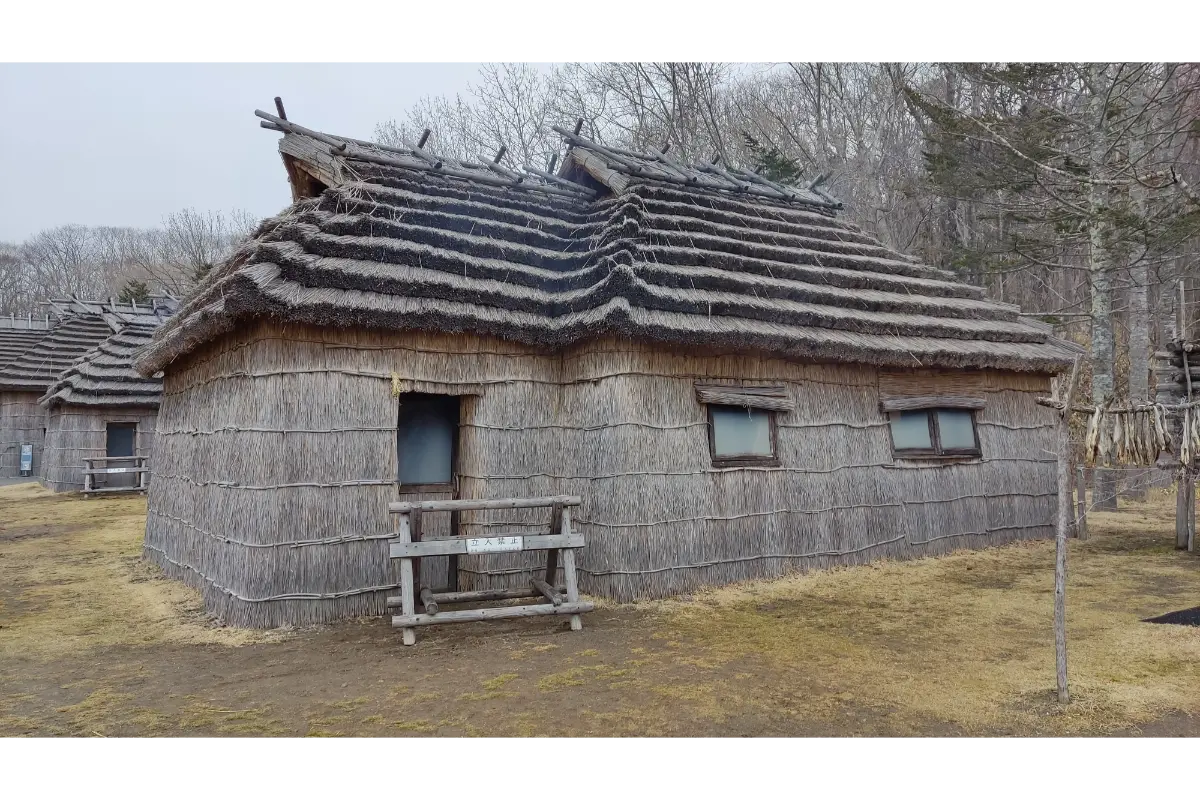
Beyond the museum walls, the outdoor National Ainu Park offers a vivid reconstruction of a traditional Ainu village (kotan) from the late 19th century. Visitors can enter meticulously recreated wooden houses (cise) to gain a sense of daily life and the environmental relationship with nature.
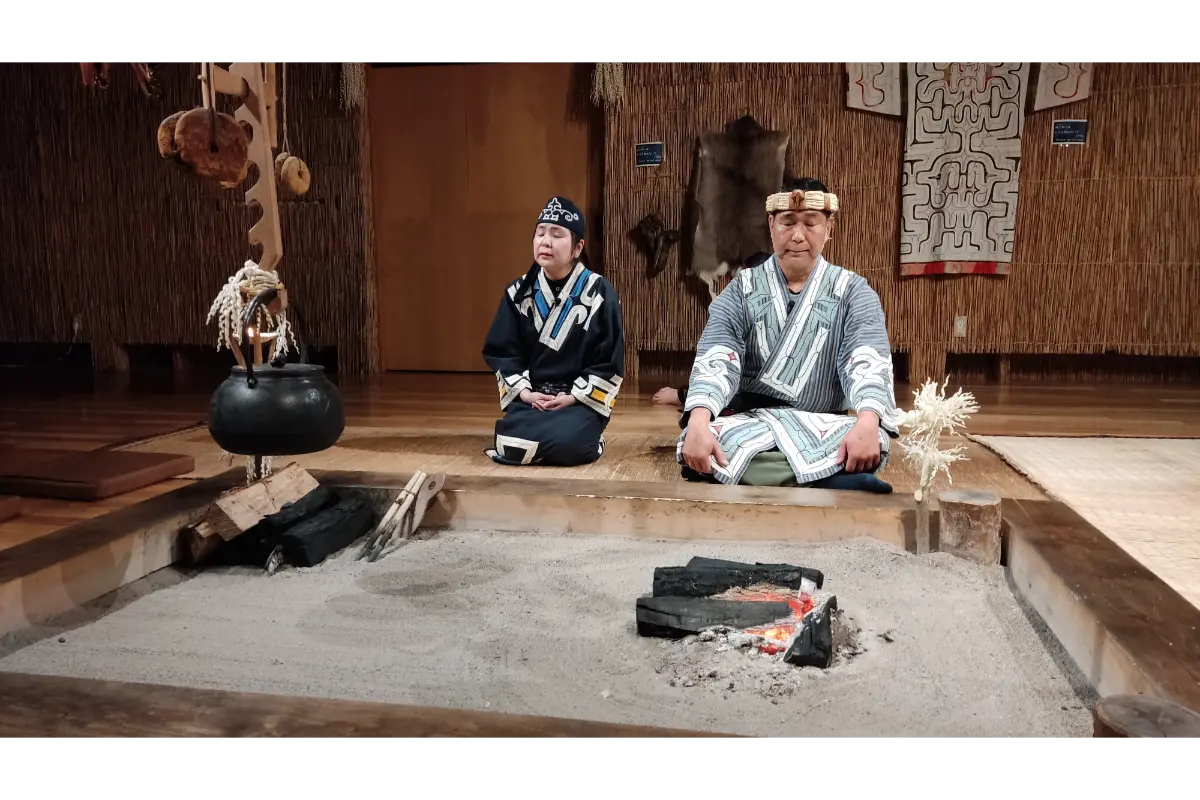
The park is also a center for active learning. Hands-on workshops, led by local Ainu artisans, allow visitors to try their hand at traditional arts such as woodcarving, weaving, and pottery, creating a vital link between the past and present. A restaurant on-site offers unique dishes featuring traditional Ainu ingredients, providing a literal taste of the culture.
Despite these significant strides, challenges remain for the full revitalization of Ainu identity. Shirouri, one of the museum’s Ainu staff members, sees Upopoy as a “great opportunity” supported by the government. He looks to successful global models like the Maori in New Zealand for inspiration, particularly in establishing language immersion schools, though he remains realistic about the fragile state of the language itself.
Experts like Jordan Ballard, a researcher in indigenous studies at Hokkaido University, agree. Ballard notes that while legal and financial frameworks have improved, critical issues surrounding collective rights—specifically hunting and fishing rights—still need to be addressed.
“Ainu community members are dedicated to promoting and preserving their practices, suggesting a resilient future for this unique culture.”
Nevertheless, Ballard is optimistic. He points to the immense dedication of Ainu community members to promoting, protecting, and preserving their practices as the primary reason this unique culture is unlikely to disappear.
For the discerning traveler seeking to understand the complex tapestry of Japanese history beyond the well-trodden paths, a visit to Upopoy is essential. It is more than just a trip to a museum; it is an encounter with the resilient soul of Hokkaido—a chance to witness a proud people reclaiming their identity and ensuring that their voices and timeless traditions are carried forward into the future.